

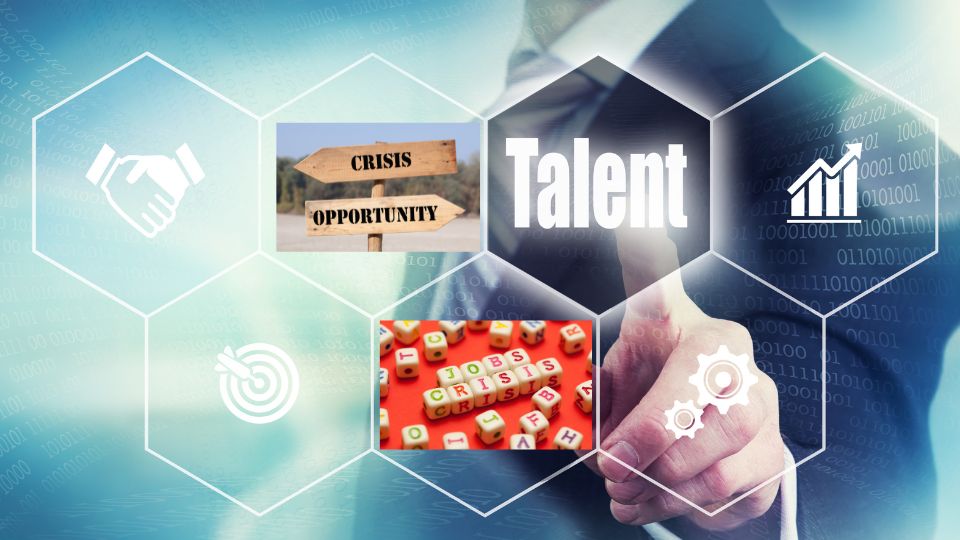
Why Financial Markets Face a Talent Extinction Crisis Event
A warning from someone who is been there before
In the year 2007, just when structured finance markets were rolling out increasingly complicated new products and innovation in the financial markets were at its peak, the financial system would collapse within twelve months. The highest paid talent in structured finance products got extinct in few months.
Risk models showed everything was fine. Ratings agencies blessed the structured products. Yet credit markets started slowly freezing from August 2007. However, the equity markets kept climbing. The stakeholders of Zetheta were pioneers in the structured finance markets and predicted the crisis and in anticipation, quickly moved to set up special situations/ distressed investment fund.
Then September 2008 arrived. Lehman fell. The world came to a collapse. Most illustrious investors in the world and almost every financial institution were in a state of shock. Zetheta’s stakeholders invested in distressed assets post Lehman crisis and predicted a rebound.
Today, Zetheta’s stakeholders makes another prediction. And this time, it is far simpler—because they already see it happening.
The financial industry is heading toward a talent extinction event.
And unlike 2008, there is no government bailout coming for this crisis.
The $500 Billion Paradox that should terrify every CFO and HRO in financial services:
Universities globally produce over 500,000 finance graduates every year. Degrees in economics, finance, mathematics, computer science—an endless stream of credentials flowing into the market.
Yet walk into any financial institution and ask about their biggest challenge. The answer is universal: “We cannot find qualified talent.”
How is this possible?
How can there simultaneously be a surplus of graduates and a shortage of talent?
The answer is uncomfortable: We are producing graduates for a financial world that no longer exists.
The Extinction Timeline
Let us show the mathematics of extinction.
University Curriculum Development Cycle: 5-7 years
From recognizing a skill gap to updating curriculum to graduating students with those skills.
Financial Market Evolution Cycle: 5-7 months
From new technology to market adoption to competitive necessity.
Do you see the problem?
By the time a university updates its curriculum to teach blockchain finance, the industry has moved to quantum-resistant cryptography. By the time students graduate with machine learning courses, the market demands large language model integration. By the time institutions teach algorithmic trading, the frontier has shifted to AI-driven portfolio construction.
The education system is a time machine that only travels backward.
The Skills That Don’t Exist (Yet)
In 2019, the role of “Prompt Engineer” didn’t exist.
In 2020, “DeFi Risk Analyst” wasn’t a job title.
In 2021, “ESG Algorithm Designer” wasn’t on anyone’s resume.
In 2022, “AI Governance Officer” wasn’t a career path.
These roles did not emerge from curriculum planning. They exploded into existence overnight, demanded by markets, and filled by whoever could learn fastest—not whoever had the right degree.
Now project forward to 2030.
Research from the World Economic Forum suggests that 60% of the most in-demand financial roles in 2030 don’t exist today. And simultaneously, 60% of current roles will be either automated or obsolete.
What are universities teaching students for 2030?
The same curriculum they taught in 2020. Because that is what their accreditation allows. That is what their tenured faculty knows. That is what their infrastructure supports.
The education system is optimized for stability. Markets reward adaptability.
This is not a mismatch. This is an extinction event waiting to happen.
The Hidden Tax on Every Financial Firm
Now let us talk about what this crisis costs.
Walk into Goldman Sachs, JP Morgan, BlackRock, or any major financial institution. Ask them how much they spend annually on training new hires.
The numbers are staggering.
Goldman Sachs: Estimated $200M+ annually on training programs
JP Morgan: 18-month analyst programs costing $150K+ per hire
BlackRock: 6-12 month onboarding before productivity
Industry Average: $47 billion annually across global financial services on “training”
But here’s what that word “training” actually means:
Teaching graduates what universities should have taught them.
Skills like:
- Building actual financial models (not textbook exercises)
- Working under real time pressure (not semester deadlines)
- Integrating cross-domain knowledge (not siloed courses)
- Using contemporary tools (not outdated software)
- Collaborating across specializations (not competing for grades)
Employers are not paying for advanced training. They are paying for remedial education.
The prestigious degree gets someone through the door. The next 18 months are spent making them actually useful.
This is not sustainable.
What Employers Actually Need (But Won’t Say)
We had conversations with over 200 hiring managers across financial institutions in the past year. When you get them talking off the record, they all say the same thing:
“We don’t care where they studied. We care what they can do on day one.”
But hiring systems are not built for this honesty. HR departments filter by pedigree. Recruitment algorithms sort by university rankings. Interview panels ask about coursework, not capabilities.
Why? Because there is no other reliable signal. The degree is a proxy—an expensive, increasingly inaccurate proxy—for competence.
What employers actually need:
Not someone who studied derivatives pricing. Someone who built a derivatives pricing engine and can explain every design choice.
Not someone who took a course in risk management. Someone who implemented a risk monitoring system and knows where it breaks.
Not someone who understands behavioural finance theory. Someone who coded a bias-detection algorithm and tested it against real market data.
The difference is not subtle. It is the difference between theoretical knowledge and practical capability. Between studying about work and having actually worked.
The Student Caught in the Middle
Now let us talk about you—the student.
You did everything right. You studied hard. You earned good grades. You got into a respected program. You completed your degree.
And now you enter the job market and hear: “You need experience.”
But how do I get experience if no one will hire me without experience?
This is not a riddle. This is a broken system.
Traditional education promised a contract: “Study hard → Get degree → Get job → Build career.”
That contract is breaking down. And breaking down fast.
The new reality:
The degree gets you the interview. But interviews now include:
- Coding challenges (were you taught to code for real problems?)
- Case studies (can you think under pressure?)
- Technical deep-dives (do you understand how things actually work?)
- Portfolio reviews (what have you built?)
Universities do not prepare you for any of this. They prepare you for exams. Exams test recall. Markets test capability.
You are competing in a game you were not trained for.
And here is the brutal truth: your competition is not other graduates. Your competition is:
- AI tools that can code faster than you
- Offshore teams that work cheaper than you
- Experienced professionals who know things you don’t
- The next wave of graduates who learned what you are still learning
The half-life of your educational advantage is shrinking. Fast.
The Zetheta Thesis: Compress Time, Expand Capability
This is where ZeTheta makes a radical proposition.
What if we could collapse 18-24 months of on-the-job training into 15-day intensive projects?
Not by lowering standards. By raising intensity.
Not by teaching less. By teaching differently.
Not by simplifying problems. By forcing you to solve real ones.
Our thesis is simple:
Experience is not about time. It is about repetition under pressure with feedback.
A junior analyst might spend 18 months to encounter their first 4 real financial problems. At ZeTheta, you encounter 4 problems in your first month—each one designed to be impossible without integration across domains, AI augmentation, and relentless iteration.
The learning is not linear. It is exponential.
What Makes Someone “Market-Ready”
Let me tell you what separates graduates who thrive from graduates who struggle.
It is not intelligence. The struggling graduate is often brilliant.
It is not effort. They work incredibly hard.
It is not credentials. They have impressive transcripts.
It is comfort with uncertainty.
The ability to be handed a problem they have never seen, with tools they barely understand, under deadline pressure they have never experienced, and still deliver something that works.
This capability is not taught in classrooms. Classrooms are optimized for the opposite—clear problems, known solutions, predictable assessments.
Markets are optimized for chaos.
The students who succeed at ZeTheta are the ones who learn to:
- Start before they understand everything
- Ask better questions
- Integrate knowledge from six different domains simultaneously
- Produce artifacts, not essays
- Deliver under pressure, not just understand in comfort
These are not natural talents. These are learnable skills. But they require a different learning environment—one that accepts failure as data, time pressure as reality, and AI as colleague.
The Proof: 29,000+ Zetheta Projects with Innovations & Research taken up by students & freshers in the 1st month of January, 2026 alone upon launch.
This is not theory. This is what is already happening.
ZeTheta currently serves over 27,000 students globally. From Mumbai to Manhattan, Singapore to São Paulo. Different time zones. Different backgrounds. Different starting points.
Common outcome: Projects that employers actually want to see.
Not projects that get graded. Projects that get deployed.
Not case studies that get discussed. Solutions that get implemented.
Not knowledge that gets tested. Capabilities that get demonstrated.
Our students don’t just complete projects. They build:
- Trading algorithms that outperform benchmarks
- Risk models that catch what traditional metrics miss
- Behavioural analysis tools that predict market sentiment
- Regulatory technology that automates compliance
- Portfolio construction systems that integrate ESG with returns
These are not student projects. These are product prototypes.
And when our students approach employers, they don’t ask: “Will you train me?”
They demonstrate: “Here is what I have already built/ researched. Where do you need this capability?”
The Invisible Institution: Already Here
In our first blog, we introduced the concept of the “invisible financial institution”—a distributed network operating without physical headquarters, connected by technology and shared capability.
That future is already here. You are just not seeing it correctly.
Renaissance Technologies doesn’t succeed because of their office building. They succeed because of their algorithmic capability—distributed across PhD mathematicians who might never meet in person.
Two Sigma doesn’t win because of their trading floor. They win because of code—written collaboratively across continents, executed algorithmically, optimized continuously.
Decentralized finance protocols like Aave and Compound aren’t failing because they lack corporate structures. They are succeeding because they lack them—operating through smart contracts and community governance.
The future financial institution is already here.
It just does not look like what you expected. No mahogany desks. No corner offices. No glass towers in financial districts.
Just capability. Distributed. Networked. Algorithmic. Borderless.
And it requires a completely different kind of professional.
The Crisis is always an Opportunity
Here is what most crisis predictions miss: Crisis create opportunities for those who see them coming.
In 2008, while others panicked, those who understood the crisis made fortunes. Not because they were lucky. Because they were prepared.
This talent extinction event is your 2008.
While others compete for traditional roles with traditional credentials, you can build something different:
- The portfolio that demonstrates capability, not just credentials
- The skills that matter tomorrow, not just yesterday
- The network that’s distributed, not just local
- The mindset that’s adaptive, not just educated
The old contract was:“University certifies you → Employer hires you → Loyalty builds career”
The new contract is:“You prove capability → Opportunities find you → Value creates career”
A Message to Employers
If you are reading this as a hiring manager, CFO, or institutional leader, here is my question:
Can you afford to wait 18 months for your next hire to become productive?
Can you afford to train skills that should have been learned before arrival?
Can you afford to compete for the same limited pool of “qualified” candidates from the same handful of prestigious programs?
Or would you rather access students who arrive with:
- Proven project completion under deadline pressure
- Demonstrated cross-domain integration capability
- Portfolio of actual work, not just academic transcripts
- Experience with AI-augmented workflows
- Comfort with distributed, asynchronous collaboration
This is not about charity. This is about competitive advantage.
The firms that figure out how to access, evaluate, and integrate non-traditional talent pipelines will have enormous advantages over those who do not.
The first question is not “Where did you study?” The first question should be “What have you built?”
ZeTheta provides the answer to that question.
A Message to Students
If you are reading this as a student—whether in your first year or final semester—here is what we need you to understand:
Your degree is not your safety net. Your capability is.
The world is changing faster than your curriculum can adapt. The skills you are learning are depreciating faster than you think. The job market is more competitive than anyone admits.
But this is not a reason for despair. It is a call to action.
You have something previous generations did not: Access to learning tools that would have seemed like science fiction a decade ago.
- AI assistants that answer questions faster than professors
- Cloud infrastructure that costs nothing to experiment with
- Global networks that share knowledge freely
- Platforms like ZeTheta that provide real problems to solve
The constraint is not access. The constraint is action.
Will you spend four years collecting grades, or will you spend those same years building capability?
Will you graduate with a transcript, or will you graduate with a portfolio?
Will you ask employers for training, or will you show them what you have already built?
The choice is yours. But the clock is ticking.
The Prediction: Five Years from Now
Let us end with a prediction. And given our track record, we would suggest taking it seriously.
Five years from now—2030—the financial employment landscape will look radically different.
Traditional recruitment pipelines will have collapsed under their own inefficiency. Firms cannot afford 18-month training programs when markets change in 18 days.
AI will have eliminated 40% of current entry-level roles. Not because machines replaced humans, but because humans augmented by AI became 10x more productive—making other humans redundant.
The degree will matter less than the portfolio. Credentials will matter less than capability. Pedigree will matter less than proof.
And the students who adapted early will own that future.
They won’t be asking for jobs. They will be creating them—either as employees who become indispensable, or as entrepreneurs who build the next generation of financial infrastructure.
The talent extinction event is coming.
But extinction creates ecological niches. New species emerge. New opportunities open. New winners are crowned.
The question is: Which side of extinction will you be on?
The Choice
So here is where we are:
The old system is breaking. The new system is emerging. The transition is happening right now—not in some distant future.
You can wait for universities to catch up. (They won’t.)
You can hope employers lower their standards. (They can’t.)
You can compete in the old game with old rules. (You’ll lose.)
Or you can do something different.
You can accept that learning is no longer something that happens before work—it is something that happens through work.
You can embrace AI as your learning partner, not your threat.
You can build portfolios, not just collect grades.
You can prove capability, not just assert credentials.
You can take up projects at Zetheta that is already redefining financial markets.
In 2007, we predicted a crisis. Wall Street ignored it.
In 2026, we are predicting another one. This time, you don’t have to wait for validation.
The talent extinction event is here. Your response determines your survival.
Welcome to ZeTheta. We are building the survivors.
Ready to prove your capability?
Explore our projects at www.zetheta.com/projects
Want to hire talent that’s already proven?
See what our students build at www.zetheta.com/employers
The future does not wait. Neither should you.